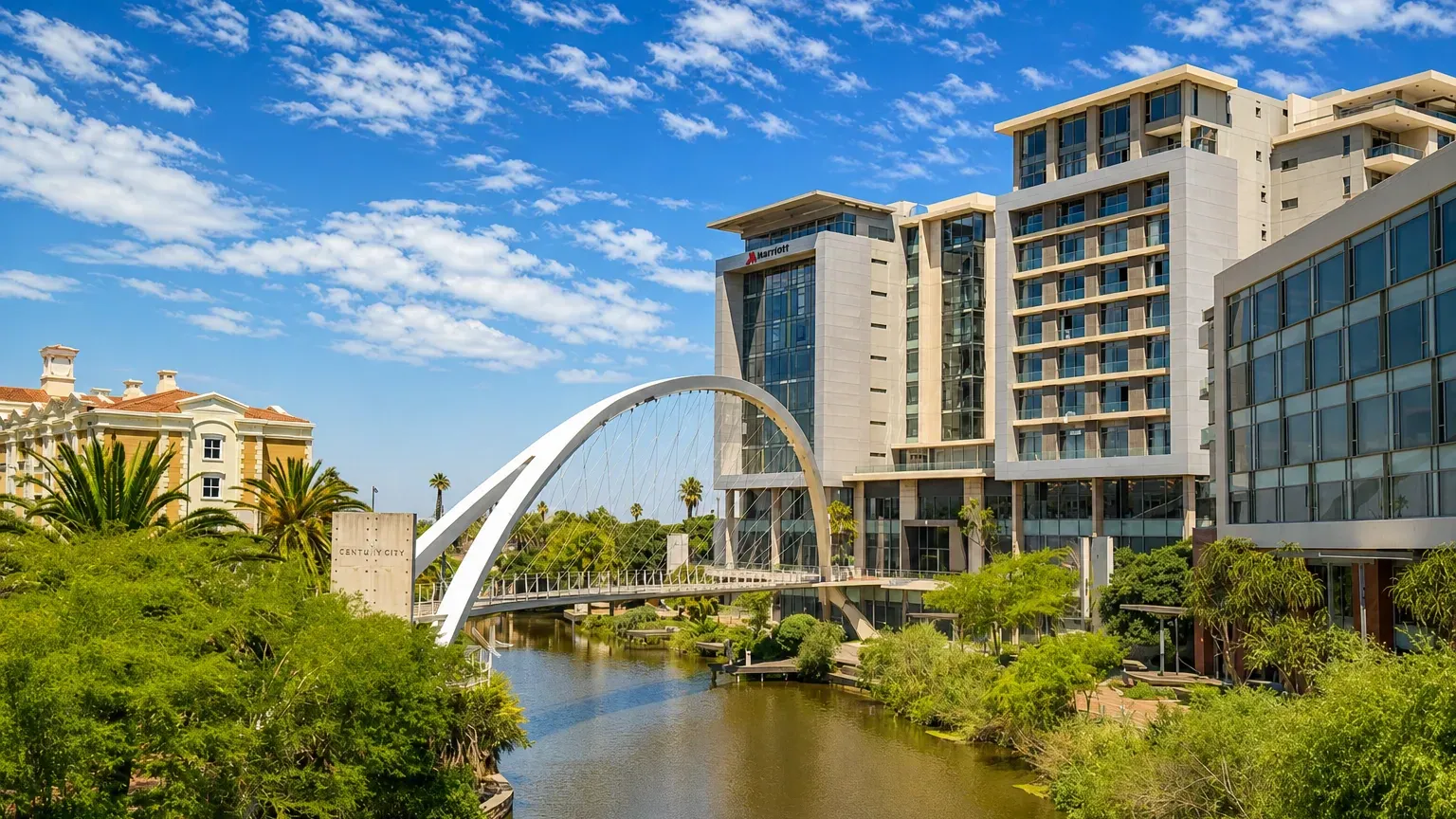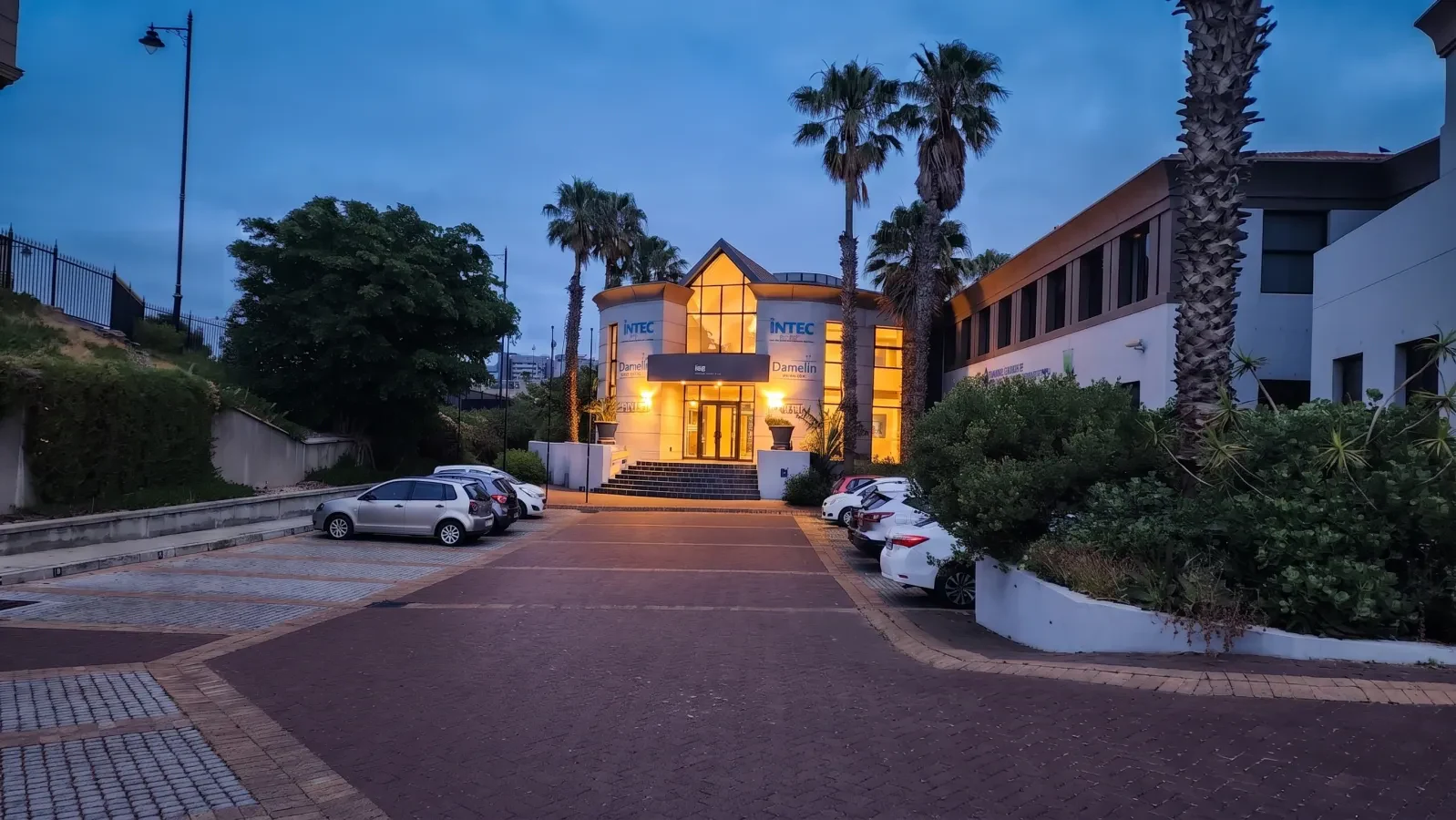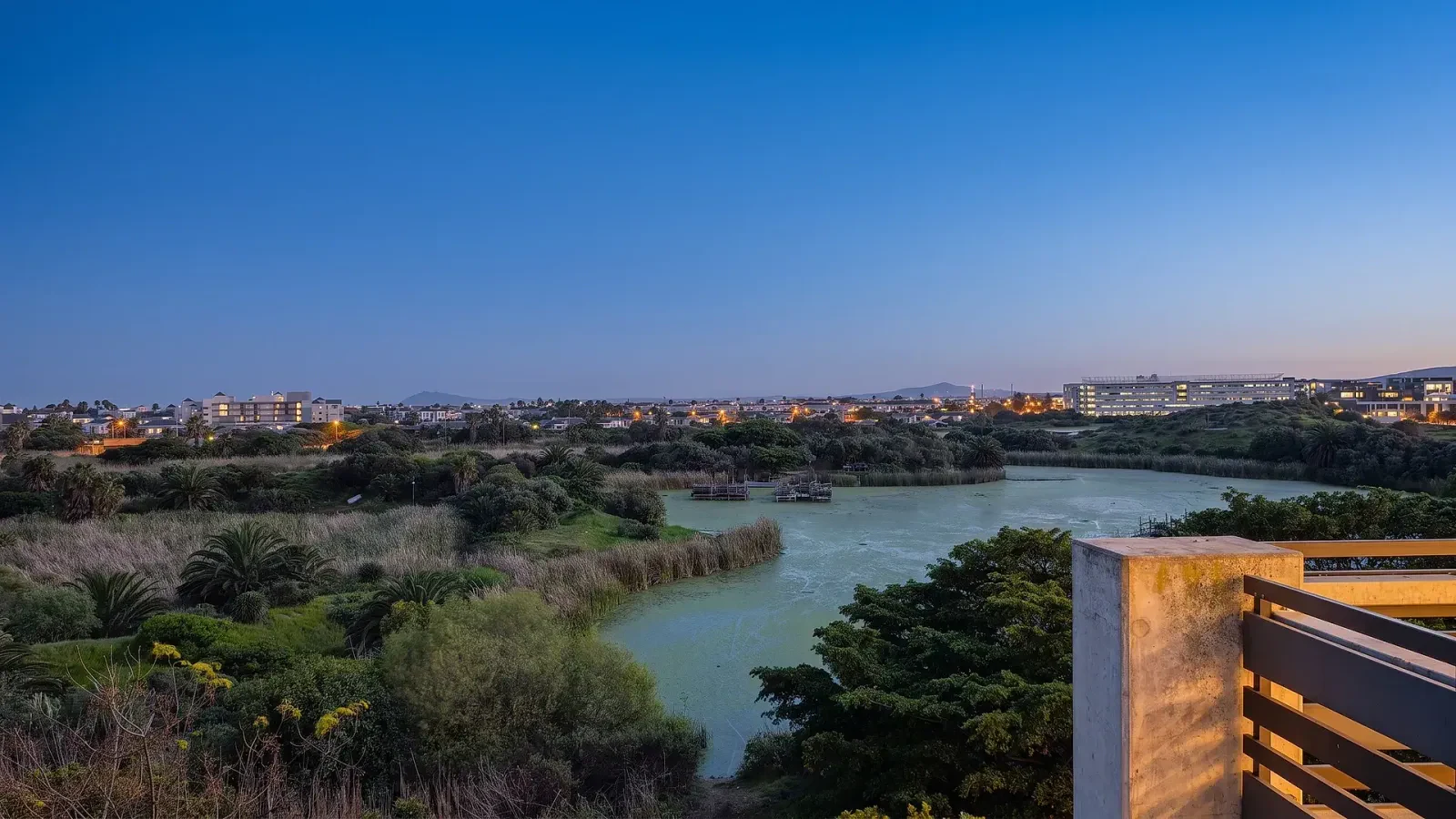
If you know Century City mainly for Canal Walk, its office parks, hotels, apartments and conference facilities, it is easy to miss one of the most important pieces of the precinct: Intaka Island.
I spend a lot of my working week in Century City, moving between office buildings, meeting landlords and showing companies around the precinct. Intaka Island is one of those places I keep coming back to when I explain why Century City works differently from a conventional office node. It is not simply landscaping around a development. It is a 16-hectare wetland and bird sanctuary that was built into the planning of Century City from the beginning and has been actively managed for three decades.
What makes the story interesting is that Intaka Island is neither a completely untouched natural wetland nor a purely man-made park. It developed from the original Blouvlei seasonal wetland, degraded habitat, invasive vegetation and an important breeding area for waterbirds, combined with constructed wetlands, restored indigenous vegetation, engineered water systems and long-term environmental management.
In this guide I want to look at how Intaka Island came about, what was there before Century City, the timeline from the first environmental studies in the mid-1990s to the reserve we see today, how the wetland actually works, and why I think it matters to Century City as both an environmental and commercial precinct.
What is Intaka Island?
Intaka Island is a 16-hectare wetland conservation area in the centre of Century City in Cape Town. The name Intaka means “bird” in isiXhosa, which is appropriate for a sanctuary that supports more than 120 recorded bird species across a range of wetland, open-water, reed-bed, fynbos and terrestrial habitats.
The reserve is made up of two very different halves. The western side contains constructed wetlands that help purify and manage water, provide breeding and feeding habitat for waterbirds, and support recreation and environmental education. The eastern side contains seasonal pans and sand plain fynbos, both of which are important conservation habitats and require a different management approach.
This distinction matters. When people hear “nature reserve”, they often imagine a piece of land that was simply fenced off and left alone. Intaka is more complicated than that. Its value comes from a combination of protecting what remained, rebuilding habitat, constructing wetland cells, re-establishing indigenous plants, managing water quality and continuously adapting the site as the surrounding city developed.
Before Century City: Blouvlei, waterbirds and degraded wetlands
Before Century City existed, the wider 250-hectare site was not the manicured mixed-use precinct we know today. Official Intaka and Century City records describe large areas covered by invasive alien vegetation, particularly Port Jackson acacias, together with degraded wetlands and seasonal pans.
The area was known as Blouvlei. Water collected in the seasonal wetland, and flooded vegetation created breeding habitat for waterbirds. A substantial heronry developed in this environment, which made the ecological importance of the site difficult to ignore once large-scale development was being planned.
One of the points I find most interesting is that the environmental story did not happen after Century City was built. It was part of the planning argument before the development was allowed to proceed.
The Intaka Island timeline
December 1995: the environmental work begins
Paul Lochner, who later became chairman of the Intaka Island Environmental Trust, has recorded that the CSIR was approached in December 1995 by Martin Wragge of Monex, the developer at the time, to carry out an Environmental Impact Assessment that would incorporate water bodies into the proposed Century City development.
That meant the wetland question was already being considered before the first major buildings appeared.
January 1996: Century City receives rezoning approval, with conditions
Century City Property Owners’ Association documentation records that the Premier of the Western Cape approved the rezoning of the Century City site in January 1996. The approval was conditional on further work, including an Environmental Impact Report and a General Site Development Plan.
July 1996: the 16-hectare wetland becomes a formal planning requirement
By July 1996, the required reports had been approved, but not without environmental conditions. These included the establishment of a Blouvlei Environmental Committee, the retention of at least 16 hectares for a multi-purpose environmental wetland, and the preparation of an Environmental Management Plan.
The first meeting of the Blouvlei Environmental Committee took place on 16 July 1996. Its membership included representatives from local government, Cape Nature Conservation, environmental organisations, local ratepayers, CSIR specialists, the developer, engineers and planners. The committee’s role was not ceremonial. It was intended to review designs, guide environmental management, develop monitoring programmes, identify problems and create public awareness.
1997: Century City moves from planning into construction
Century City’s own history records that the first sods were turned in 1997. From that point, the challenge was to build a major mixed-use development around a functioning 16-hectare conservation area rather than treat the wetland as leftover land.
The early environmental work included retaining seasonal-pan habitat, constructing new wetland areas and canals, re-establishing indigenous vegetation, managing water quality and creating suitable breeding habitat for birds.
2004: Rabie acquires the remaining development rights
In 2004, Rabie Property Group acquired the remaining undeveloped land and associated development rights at Century City. The environmental and precinct-management obligations did not disappear with the change in developer. They continued through the Century City Property Owners’ Association and the environmental management structures already established for the site.
For me, that continuity is an important part of the Intaka story. A conservation area inside a private mixed-use precinct only works if its management survives changes in ownership, economic cycles and development phases.
2006: formal conservation recognition
Intaka Island received Voluntary Conservation Site status from CapeNature in 2006. The official Intaka record notes that the 16-hectare nature area was recognised because of its bird and botanical diversity, including sand plain fynbos and seasonal-pan plant communities.
By then, the reserve had moved well beyond the idea of simply protecting a wet patch in the middle of a development. It had become a managed urban conservation site with formal environmental objectives.
2010: the Environmental Education Centre is completed
The Environmental Education Centre, or Eco-Centre, was completed in 2010. This expanded Intaka’s role from conservation and water management into a much stronger public-education function.
The centre itself is designed as a working sustainability exhibit. Intaka lists features such as rainwater harvesting, grey-water reuse, photovoltaic panels, a solar geyser, composting systems, a biogas digester, permeable paving and other technologies that can be incorporated into education programmes.
2026: Intaka marks 30 years and takes on a new conservation role
In 2026, Intaka Island marked 30 years since the environmental planning that established the reserve. That same year, the reserve became part of a conservation project involving one of Cape Town’s rarest wetland plants.
On 13 May 2026, a team involving the City of Cape Town and Intaka Island translocated a small number of Cotula myriophylloides, commonly known as Floating Buttons or Salt Pan Daisy, to Intaka Island. The species had been regarded as lost from Cape Town for almost a century before being rediscovered in 2024. Intaka was selected because its seasonal wetland conditions closely resemble the plant’s natural habitat and because the reserve is actively managed and protected.
I think this is one of the strongest pieces of evidence that Intaka is still a living conservation project. The reserve was not “finished” in 1996, 2006 or 2010. Its ecological role continues to evolve.
How the wetland actually works
The western side of Intaka contains constructed wetland cells. These are not decorative ponds. They form part of the water-management system serving Century City.
Century City’s environmental team explains that the wetland helps clean and polish water circulating through the precinct’s canals. Water quality is monitored and tested, while the wetland vegetation helps create a functioning habitat for birds, aquatic life and other species.
The eastern half works differently. It includes seasonal pans and sand plain fynbos, habitats that are naturally more sensitive and cannot be managed in the same way as the constructed wetland. The conservation objective there is less about creating an amenity and more about protecting and restoring ecological conditions.
That is why I would describe Intaka as both ecological infrastructure and conservation land. It performs a practical function for the precinct while also protecting habitat that has value in its own right.
Birdlife, plants and the heronries
Birds are central to the identity of Intaka Island. Official material records more than 120 bird species, supported by seven different habitat types. Reed beds, open water, fynbos, shrubs, grasses and seasonal wetlands attract different species for feeding, breeding and roosting.
The reserve also contains purpose-built heronries. These structures were designed to recreate suitable breeding and roosting conditions after the original habitat changed through development. Intaka describes the man-made heronries as internationally recognised for their simple construction and success in attracting birds.
The plant story is just as important. Current official publications do not all use exactly the same plant count, which is worth being transparent about. Depending on the publication and the way the inventory is described, Intaka and Century City material refers to more than 200 indigenous plant species, including threatened plants associated with sand plain fynbos and seasonal wetlands.
I would rather state that carefully than repeat a single number as if biodiversity is a fixed statistic. Species lists change as surveys improve, plants are re-established and conservation projects develop.
The Eco-Centre and environmental education
The Eco-Centre changed the way Intaka interacts with the public. It gives school groups, families, researchers and visitors a place to learn about wetlands, water systems, indigenous plants, renewable energy, recycling and biodiversity in a real working environment.
For a child, the lesson is not an abstract diagram in a classroom. They can walk through the wetland, see reed beds and waterbirds, visit the bird hides, inspect sustainability systems in the centre and understand how an urban development can affect the natural environment around it.
That educational role is one of the reasons I think Intaka has more value than a normal landscaped park. It explains the system, rather than simply presenting a green space.
What can you do at Intaka Island today?
Intaka Island is open to the public at 2 Park Lane in the Grand Central Precinct of Century City. The reserve offers a walking trail, picnic areas, two bird hides, indigenous and medicinal gardens, Bird Mountain and access to the Eco-Centre.
There is also a wheelchair-friendly circular route of approximately 1 kilometre. Boat trips operate through the Century City canal system from Intaka, giving visitors a very different view of the precinct and its relationship with the wetland.
Because Intaka is a conservation area, pets and bicycles are not permitted on the island. Visitor hours, entrance fees and boat schedules can change, so I would always check the official Intaka Island visitor information before planning a trip.
Why Intaka Island matters to Century City as a commercial precinct
This is where my property background comes into the discussion.
When I show businesses office space in Century City, we normally talk about the practical things first: access to the N1, public transport, parking, backup power, fibre, security, restaurants, hotels and the quality of the buildings. Those are the items that affect the daily operation of a business.
But people also respond to the environment around the office. They notice whether staff can walk somewhere at lunch, whether clients can find a coffee shop, whether the public realm feels maintained, and whether there is a sense that the precinct has been planned rather than assembled building by building.
Intaka Island is part of that broader quality-of-place story. I would not claim that a wetland on its own determines office rentals or property values. Commercial property is never that simple. But it contributes to the amenity, identity and environmental credibility of Century City in a way that most competing office nodes cannot replicate easily.
It also gives substance to Century City’s “live, work and play” positioning. A company can occupy an office in a dense urban precinct and still have a functioning wetland reserve, bird hides, walking paths and environmental education facilities within the same broader neighbourhood.
For businesses comparing locations, that may not be the first item on the spreadsheet, but it can influence how the area feels to staff and visitors.
What I think developers can learn from Intaka Island
The biggest lesson for me is that environmental constraints do not always have to sit in opposition to development.
Century City could have treated Blouvlei purely as a problem to be engineered away. Instead, the environmental assessment resulted in a 16-hectare conservation area being embedded in the development framework. Wetland functions were incorporated into the canal system, environmental monitoring became part of precinct management, and the reserve eventually developed its own public and educational role.
That does not mean the process was simple or that every environmental impact disappeared. Development altered the site substantially. The important point is that the ecological issue became part of the masterplan and remained subject to long-term management.
The second lesson is governance. Intaka did not survive because of one developer, one consultant or one conservationist. Its management has involved the Century City Property Owners’ Association, environmental specialists, CapeNature, the City of Cape Town and the Blouvlei/Intaka Island Environmental Committee over many years.
That kind of continuity matters. A wetland inside a major commercial and residential precinct requires funding, monitoring, vegetation management, water testing, habitat restoration and people who are prepared to adjust the management plan when conditions change.
Intaka Island and the wider story of Century City
Century City’s first development rights date back to 1996 and the first sods were turned in 1997. The precinct then grew through major milestones such as Ratanga Junction, Canal Walk, office developments, residential precincts, hotels and the conference centre. Rabie acquired the remaining undeveloped land and rights in 2004, and the precinct continued to expand around the canals, public spaces and Intaka Island.
That history is important because it shows that Intaka is not an amenity that was added once the development became successful. The 16-hectare environmental area was one of the conditions around which Century City had to be planned from the outset.
In my view, that makes Intaka one of the most important pieces of the Century City story. It demonstrates that the identity of a commercial node can be shaped just as much by the land that is protected and managed as by the buildings that are constructed.
Considering office space in Century City?
If you are looking at Century City from a business point of view, I would still start with the fundamentals: total occupation cost, parking, power resilience, staff access, fit-out, lease flexibility and the specific building.
You can see our current office space to let in Century City, or read my guide on how to choose office space in Century City.
But when I assess Century City as a whole, Intaka Island forms part of the reason the precinct has a distinct identity. It is an environmental asset, a piece of water infrastructure, a public educational space and a reminder of the ecological conditions that existed before the offices and apartments arrived.
Frequently asked questions about Intaka Island
What is Intaka Island?
Intaka Island is a 16-hectare wetland and bird sanctuary in Century City, Cape Town. It combines constructed wetlands with seasonal pans, indigenous fynbos, open water, reed beds and other habitats.
Was Intaka Island there before Century City?
The site contained the original Blouvlei seasonal wetland, degraded wetland areas and important waterbird habitat before Century City was developed. The modern reserve combines retained natural habitat with constructed wetlands, restored vegetation and engineered water-management systems.
Why is it called Intaka Island?
“Intaka” means “bird” in isiXhosa. The name reflects the reserve’s role as an important urban bird sanctuary.
How big is Intaka Island?
The conservation area covers 16 hectares in the centre of the wider 250-hectare Century City precinct.
When was Intaka Island established?
The key environmental planning took place in 1995 and 1996. The 16-hectare wetland was incorporated as a formal requirement in the Century City development approvals in 1996. Intaka later received Voluntary Conservation Site status from CapeNature in 2006.
How many bird species are found at Intaka Island?
Current official Intaka material records more than 120 bird species across seven different habitat types.
Is Intaka Island man-made?
Partly. The reserve includes the original seasonal wetland environment and fynbos habitat, but the western half contains constructed wetlands and other rehabilitated areas created as part of the Century City development and water-management system.
Can the public visit Intaka Island?
Yes. Intaka Island is open to public visitors and includes walking routes, bird hides, picnic areas, environmental education facilities and bookable canal boat trips. Current hours and fees should be checked directly with Intaka before visiting.
Are dogs allowed at Intaka Island?
No. Intaka’s visitor information states that pets are not allowed because the site is a conservation area.
Where is Intaka Island?
Intaka Island is at 2 Park Lane, Grand Central Precinct, Century City, Cape Town.
Sources and methodology
I compiled this guide using Brightwave’s Century City property context together with primary and independent public sources. I have prioritised official Intaka Island, Century City Property Owners’ Association and Century City material for the reserve’s history and management, and used independent academic and tourism sources as a cross-check.
A Journey with Century City: Intaka Island for Paul Lochner’s first-hand account of the December 1995 CSIR involvement and the early design process.
Intaka Island: History for the 1996 development context, Voluntary Conservation status and the Eco-Centre timeline.
Intaka Island: Blouvlei / Environmental Committee for the 16 July 1996 committee meeting and environmental-management structure.
Century City: History for the wider precinct development timeline, including the first construction phase and the 2004 Rabie acquisition.
Century City Property Owners’ Association documentation for the 1996 planning conditions requiring the 16-hectare wetland, environmental committee and management plan.
Intaka Island: Environment for the distinction between the constructed western wetland and the seasonal pans and fynbos on the eastern side.
Century City: Environmental Sustainability for canal-water management, biodiversity and ongoing environmental monitoring.
Intaka Island: Floating Buttons conservation project for the May 2026 translocation of Cotula myriophylloides.
University of Cape Town: Doing it differently, the story of Intaka Island as an independent historical account of the early conservation process.
Cape Town Tourism: Explore Intaka Island as an independent visitor and sustainability reference.
Source review completed 8 September 2026. Biodiversity counts are living inventories and published totals vary slightly between official pages. I have therefore used conservative “more than” figures rather than presenting one changing count as permanent.