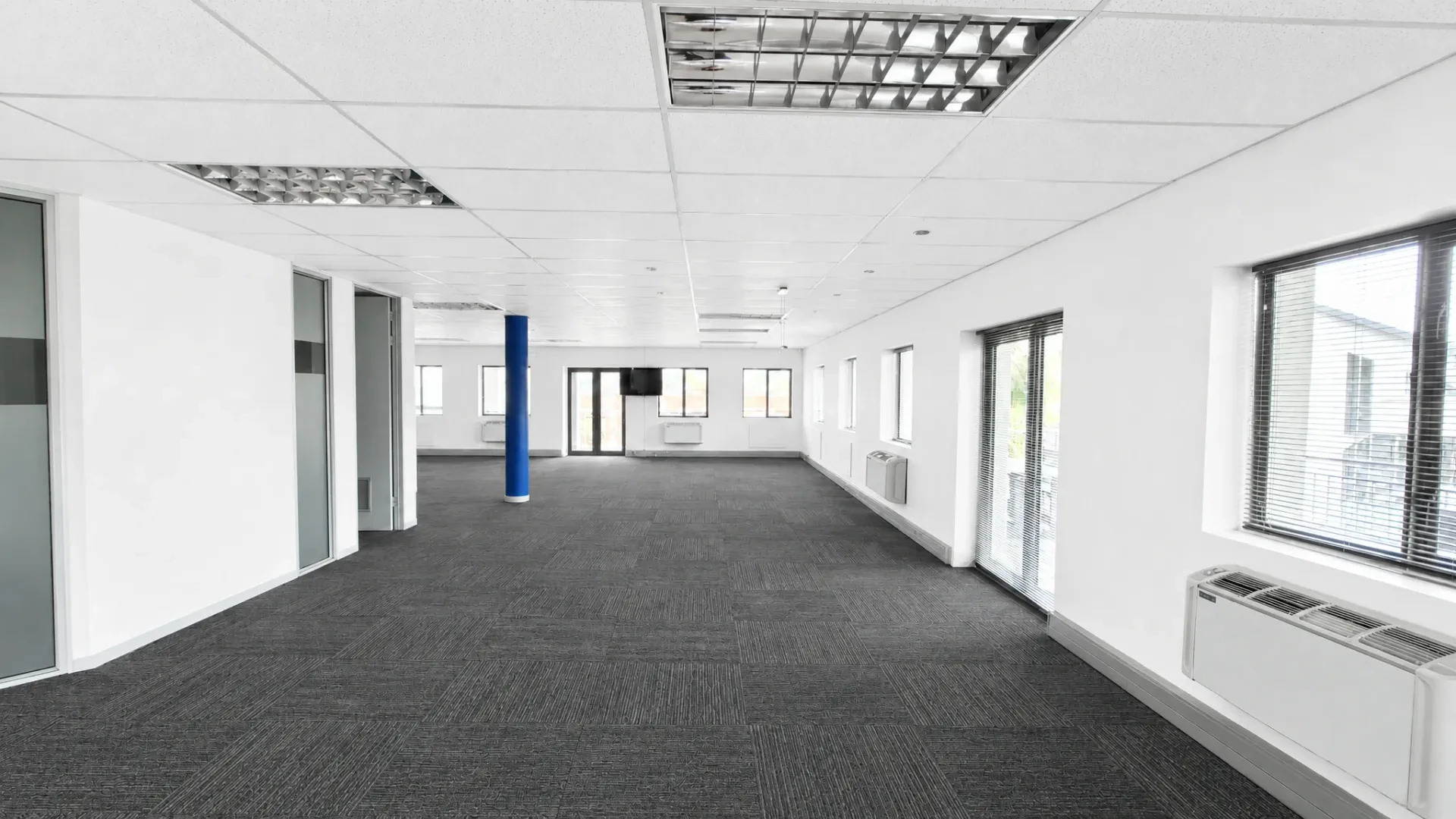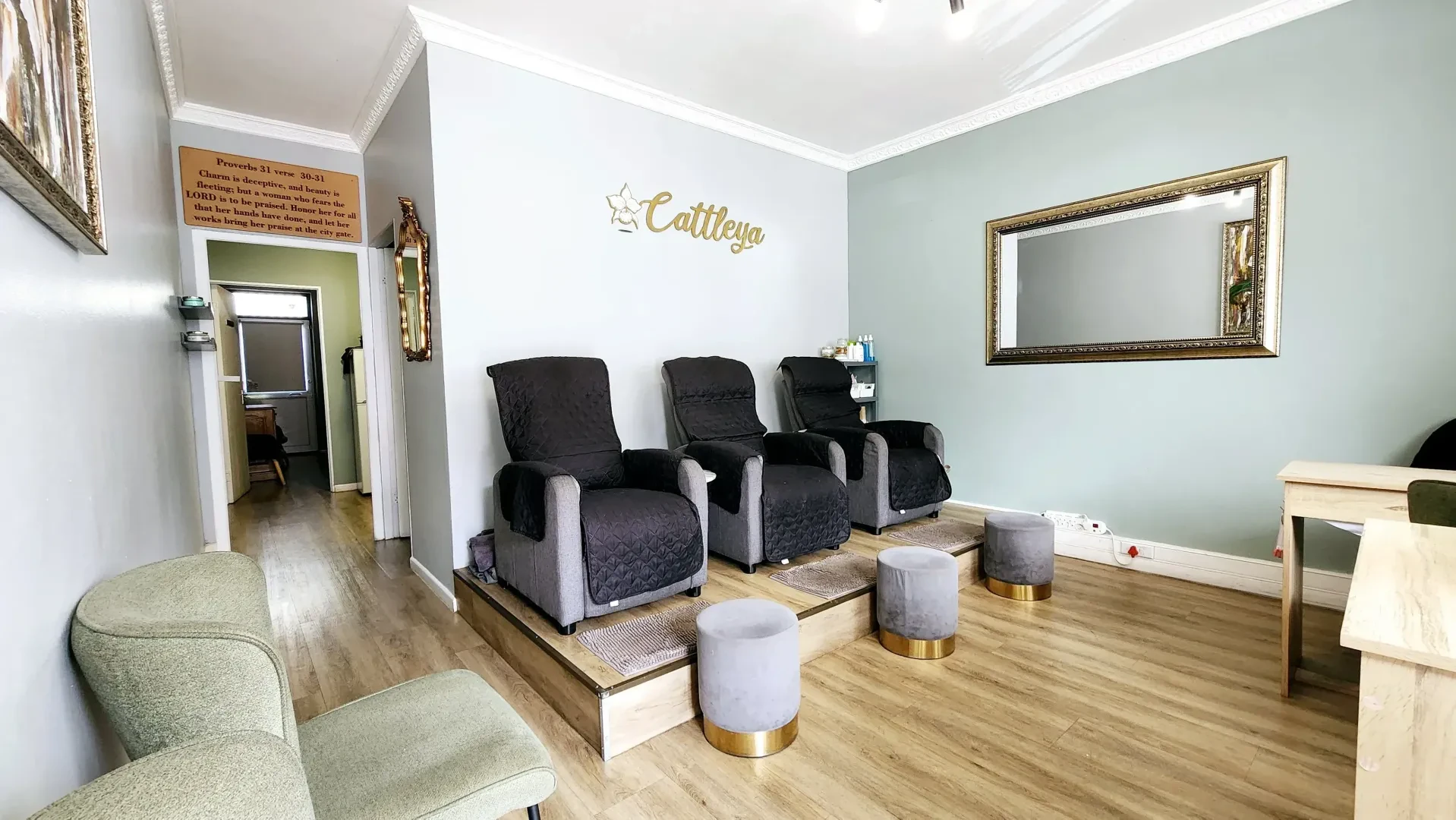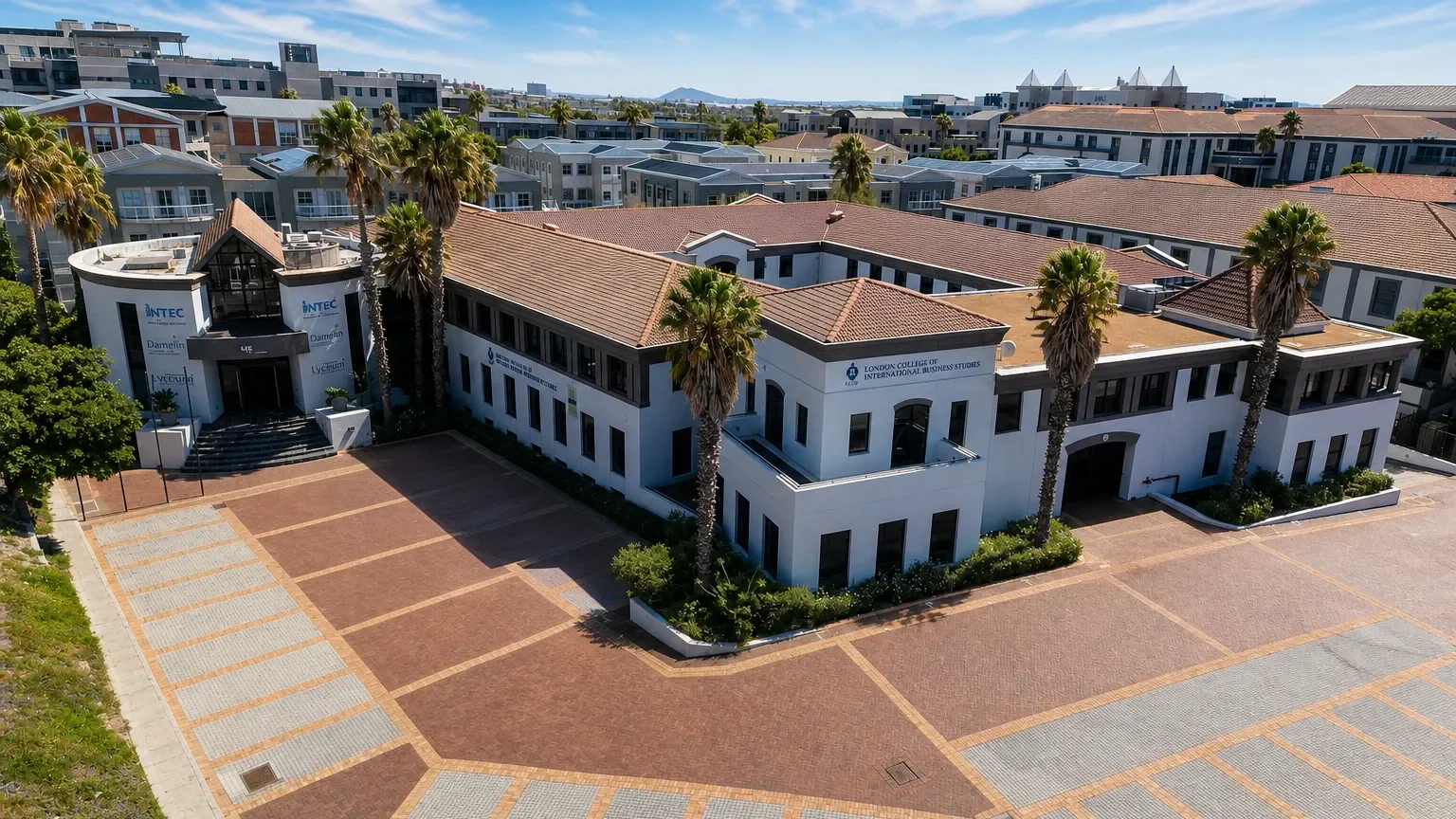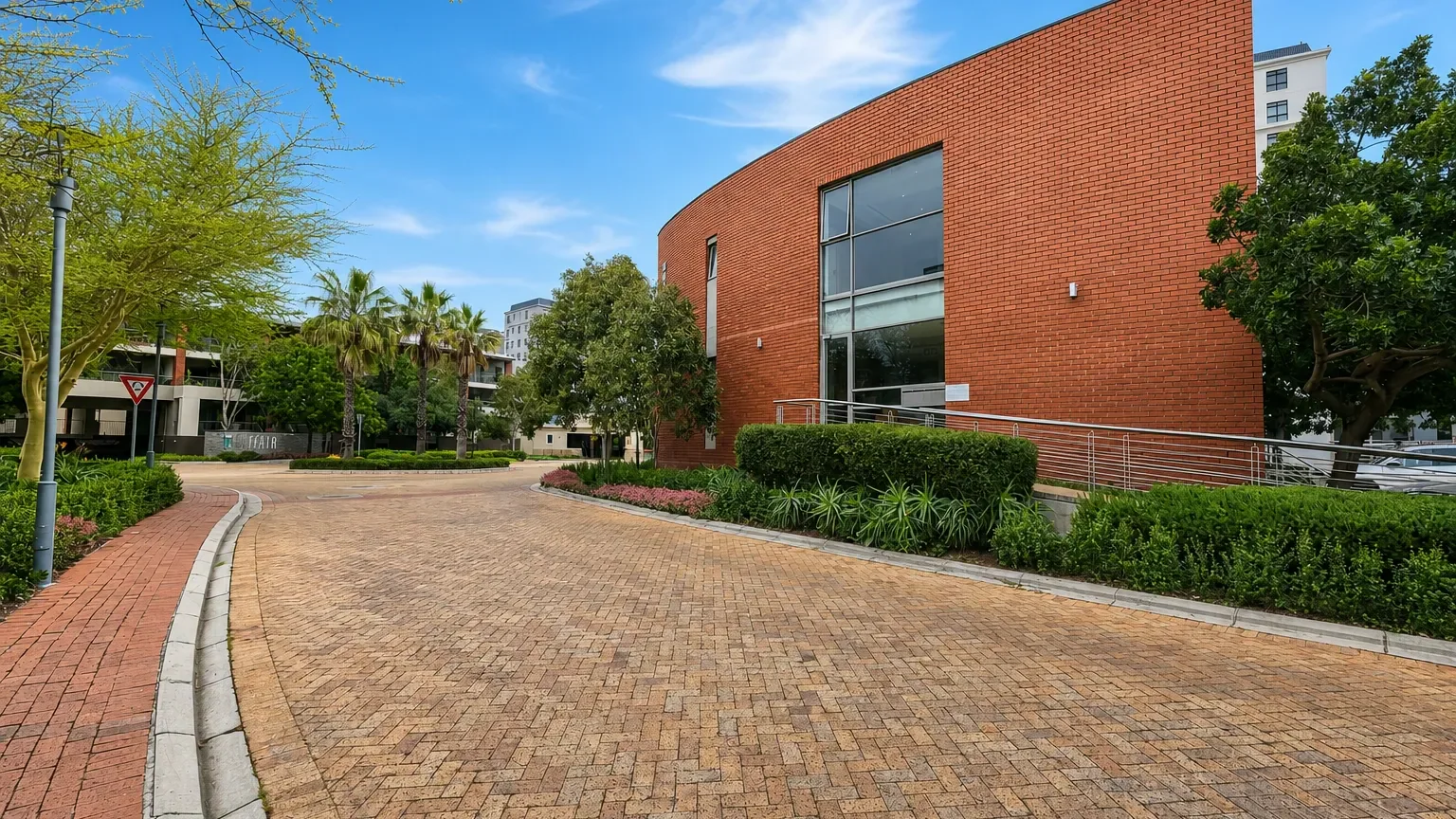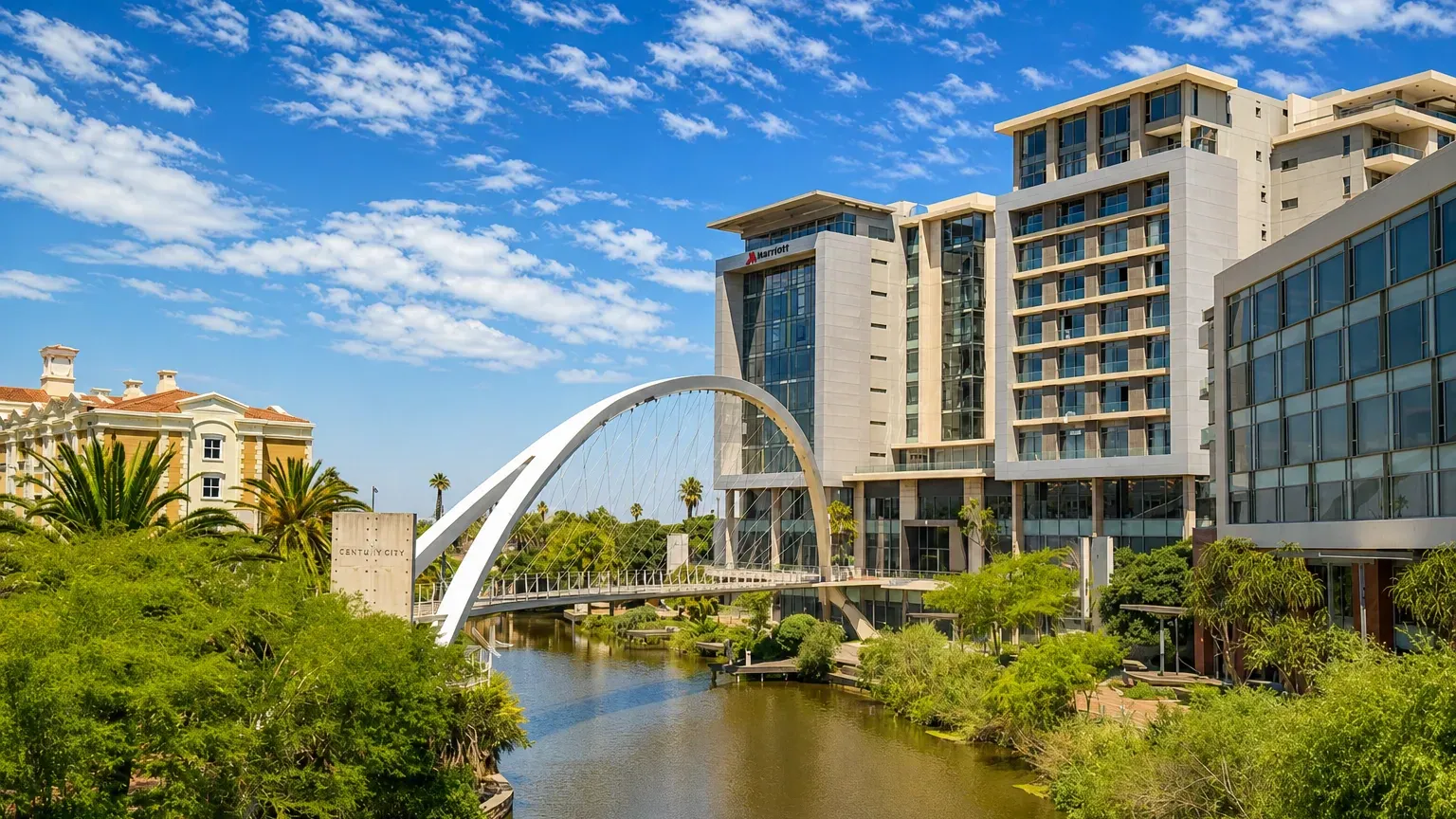
Trying to understand how to choose office space in Century City? Start with the full cost, parking, backup power and fit-out, not only the rental rate.
Century City is one of Cape Town’s strongest decentralised office nodes. It is well managed, easily accessible from the N1 and surrounded by the type of amenities that make a real difference to staff.
It is not, however, the cheapest office node in Cape Town. Nor should it be sold as one.
Tenants pay for the location, security, public environment, access to Canal Walk and the quality of the better buildings. The important part is working out which of those benefits your business needs and which ones you may be paying for unnecessarily.
I spend a great deal of time comparing offices in Century City, and one thing becomes clear quickly: the newest or most expensive building is not automatically the right building. The right office is the one that works for your people, supports your operation and does not surprise you financially after the lease has been signed.
Century City Is Not One Office Market
It is easy to speak about Century City as though every office falls into the same category. That is not the case.
The area has older, cost-conscious office parks, established A-grade buildings and a growing collection of premium offices. Two spaces situated only a few minutes apart can have very different rentals, parking allocations, power coverage and fit-out costs.
Based on Brightwave’s tracked Q2 2026 market data, current asking rentals generally fall into the following ranges:
Market positionIndicative asking rentalValue and older stockR130, R175/m²Mainstream A-gradeGenerally R175, R240/m²Premium/P-gradeR240, R318/m²
These are indicative asking rentals per square metre per month. They are not guaranteed achieved rentals, and the advertised rate will generally exclude VAT, parking, utilities and certain building-specific recoveries.
Selected value-positioned A-grade offices may also fall below these bands. The rental depends on the specific building, floor, size, existing fit-out, parking allocation and lease terms.
You can review the latest figures in Brightwave’s Century City commercial property market guide.
Building grade is useful, but it should not make the decision for you. An older fitted office at R170/m² could cost less to occupy than a new white-box office at R240/m² once the fit-out is included. On the other hand, a more expensive building may provide better power resilience, parking, energy efficiency and a stronger working environment for staff.
That is why we compare the full transaction and not only the rate advertised online.
What Century City Offices Currently Cost
The current market gives tenants a fairly wide choice.
At the time of writing, Brightwave is marketing a 317m² office in Nordic Park at R189/m². It is an established A-grade option with 13 parking bays, fibre connectivity and backup power.
A larger 644m² office in the Colosseum is marketed at R198/m². It has a substantial existing fit-out and 28 parking bays, making it suitable for a larger professional or operational team.
At the upper end of the market, the current 3,152m² Canal Plaza office is marketed at R318/m². This is a very different product aimed at a large corporate or head office tenant wanting new-generation premium space.
These examples show why a single “average Century City rental” can be misleading. Availability also changes quickly. A unit that is available today may already be under negotiation by the time a business is ready to arrange a viewing.
For the most recent options, view Brightwave’s live comparison of office space to let in Century City.
Do Not Calculate Your Budget Using Rental Alone
One of the most common mistakes tenants make is multiplying the size by the rental rate and assuming that is their complete monthly cost.
Unfortunately, it is rarely that simple.
Your total occupancy cost may include:
Gross or net office rental
Operating-cost recoveries
Municipal rates or levies
Parking bay rentals
Electricity and water
Generator diesel recovery
After-hours air-conditioning
Refuse and cleaning charges
Annual rental escalation
VAT
The wording “gross rental” also needs to be checked carefully.
In some buildings, the gross rental includes the base rental and certain operating costs. In others, additional recoveries are charged separately. Adding operating costs to an already inclusive gross rental can result in the tenant budgeting twice for the same expense.
Before signing a lease, ask for a complete monthly cost schedule showing exactly what is included, what is excluded and how variable charges are calculated.
We normally compare these costs across the shortlisted buildings. Once parking, utilities, generator recoveries and fit-out expenses are added, the building with the lowest advertised rental does not always remain the cheapest option.
Start With Your People, Not the Square Metres
Tenants often contact us with a square metre requirement before working out how the office needs to function.
A better starting point is:
Current staff count
Expected business growth
Hybrid or full-time attendance
Number of private offices
Boardroom requirements
Meeting and collaboration rooms
Reception and client areas
Storage and server-room requirements
Kitchen and staff breakaway areas
As a broad planning guide, many conventional offices work at approximately 7m² to 10m² per person once circulation and shared areas are considered.
A 30-person team may therefore need somewhere between 210m² and 300m², depending on the layout and how many employees are in the office at the same time.
The existing fit-out matters just as much as the size. A well-planned 250m² office can sometimes accommodate a team more comfortably than a badly divided 320m² space.
Do not pay for unnecessary passages, oversized reception areas or offices that your business will not use. Equally, do not take a space that technically accommodates everyone but leaves no room for meetings, storage or future growth.
Parking Can Become the Real Constraint
Parking is one of the quickest ways to eliminate an otherwise suitable office.
Century City buildings commonly provide approximately 3.5 to 5 bays per 100m², although every building and lease must be checked individually. Basement bays normally cost more than open or covered parking.
This ratio may be sufficient for a conventional professional office, but it can become a problem for businesses with dense staffing.
Consider a 400m² office operating at approximately 7m² per person. It could accommodate around 57 staff members, but a parking allocation of four bays per 100m² would provide only 16 bays.
The square meterage works. The parking does not.
Before viewing an office, establish how many staff members drive, how many use public transport, whether employees can share bays and whether supplementary e-Parking is available nearby.
It is much better to identify a parking problem before the lease negotiations begin.
Public Transport Is Better Than Many Tenants Expect
Century City has a managed Public Transport Interchange on Ratanga Road serving MyCiTi buses, Golden Arrow buses and authorised minibus taxis.
MyCiTi services connect Century City with surrounding areas and the Century City railway station. The train station provides another option for employees travelling from Cape Town, Bellville and the northern suburbs. Century City Property Owners’ Association
However, I would not simply write “close to public transport” in a proposal and leave it there.
We need to consider the actual building, the nearest stop, the walking distance and where the staff are travelling from. Train timetables, service frequency and the final journey from the station to the office should also be checked before a company builds its transport plan around rail.
For staff-heavy operations, this information can be as important as the rental.
Conventional Lease or Serviced Office?
Century City accommodates both traditional commercial leases and flexible serviced-office arrangements.
A traditional lease normally makes more sense when a business:
Has a stable team
Wants control over its branding
Requires dedicated meeting rooms
Plans to remain for three to five years
Can justify the fit-out expenditure
Needs private and secure access
Wants control over its internal layout
A serviced office may work better for a small team, a project-based operation or a company testing the Cape Town market before making a longer commitment.
Workshop17 Century City operates between Ratanga Park and Canal Walk, while Spaces provides flexible workspace at No. 1 Bridgeway Road.
The comparison needs to be done on a like-for-like basis.
A serviced-office rate may initially look expensive per person, but it can include furniture, internet, reception, cleaning and shared meeting facilities. A conventional lease may offer a lower monthly rental but require a deposit, fit-out, furniture, cabling and a longer lease commitment.
For a team of four, flexibility may be worth the higher monthly cost. For a stable team of 30 or 40 people, a conventional lease is often more economical over the full lease period.
Check the Generator Properly
“Generator available” is not enough information.
Before relying on a building’s backup power, confirm:
Whether tenant plug points are covered
Whether the air-conditioning remains operational
Whether lifts are supported
How quickly the generator starts
The expected running time
How diesel is recovered
Whether the generator is regularly tested
Which systems remain off during an outage
Some generators cover only common areas, emergency lighting and essential systems. Others extend backup power into the tenant’s office.
The same applies to backup water. Ask what is covered, how much capacity is available and how long the building can operate without the municipal supply.
A generator icon on a listing does not explain the full system.
Understand the Tenant-Installation Allowance
A tenant-installation allowance is a contribution from the landlord towards preparing the office for occupation.
It may be used for items such as partitioning, flooring, ceilings, electrical work and certain mechanical installations.
It is not an automatic entitlement, and it is not free money.
The amount normally depends on the lease duration, rental level, condition of the unit and strength of the tenant. A five-year lease may justify a larger contribution than a three-year lease, but every transaction is negotiated separately.
The lease should clearly record:
The value of the allowance
Which work it may cover
Who appoints the contractors
Who approves the plans
When payment takes place
Whether VAT is included
Whether an unused amount is forfeited
What must be removed at the end of the lease
An attractive allowance can lose its value if the fit-out is delayed, contractor pricing is excessive or the tenant is responsible for an expensive reinstatement at the end of the lease.
It is also worth comparing the allowance against rent-free periods or beneficial occupation. Sometimes the structure of the incentive matters more than the headline amount.
The Existing Fit-Out Can Save You Money
A fitted office may already have boardrooms, private offices, a reception, kitchens, cabling and server infrastructure.
If the layout suits your business, this can reduce the capital required before occupation. It may also shorten the time between signing the lease and moving in.
However, do not assume that an existing fit-out is automatically valuable.
Old partitions, damaged flooring, outdated cabling or an inefficient layout can become a liability. You may spend more removing and rebuilding the existing installation than you would have spent starting with a clean white box.
During a viewing, look beyond the furniture and finishes. Consider whether the layout genuinely supports the way your team works.
The Century City Environment Does Matter
Century City works because it is more than an office park.
Canal Walk reports close to 400 stores, more than 8,000 parking bays and approximately 18 million annual shoppers. Staff have access to banks, restaurants, shops, entertainment and everyday services without leaving the precinct. Canal Walk
Ratanga Park, Intaka Island, hotels, residential buildings and the Century City Conference Centre add to the environment.
These are sometimes dismissed as lifestyle extras, but they affect recruitment, staff convenience and the way clients experience the business.
Not every tenant needs to pay a premium for a canal or park outlook. But a safe, well-maintained environment with nearby amenities is something employees notice every day.
What I Would Check During a Viewing
When viewing office space in Century City, I would pay attention to more than the reception area and finishes.
Check the following:
Actual usable office layout
Natural light throughout the space
Parking allocation and bay types
Generator and backup-water coverage
Air-conditioning condition and control
Fibre availability and service providers
Existing cabling and server infrastructure
Bathroom and kitchen condition
Noise from roads or neighbouring tenants
Signage and branding rights
Access after normal business hours
Fit-out and reinstatement obligations
Visitor access and parking
Security and access-control procedures
Take measurements where necessary and compare the space with your proposed seating plan.
An office can photograph extremely well and still be completely wrong for the business.
Frequently Asked Questions
What is the average office rental in Century City?
Current asking rentals generally range from approximately R130/m² for older, value-positioned stock to R318/m² for selected premium offices.
Mainstream A-grade offices generally fall between R175/m² and R240/m², although certain value-positioned A-grade units may fall below this band. Rental depends on the building, floor, fit-out, size, parking allocation and lease terms.
Are Century City rentals quoted including VAT?
Commercial property rentals are generally quoted excluding VAT unless stated otherwise. Parking, utilities, generator recoveries and certain operating costs may also be excluded.
How much office space do I need per employee?
Approximately 7m² to 10m² per person is a useful starting point for a conventional office. The final requirement depends on the number of private offices, meeting rooms, shared areas, storage requirements and hybrid working arrangements.
How much parking should I expect?
Many Century City office buildings provide approximately 3.5 to 5 bays per 100m². The exact allocation and monthly cost depend on the building and lease.
Businesses with dense staffing may require supplementary parking or a stronger public-transport plan.
Are most Century City offices already fitted?
The market includes fitted, partially fitted and white-box offices. An existing fit-out can reduce costs, but tenants should confirm that the layout suits their operation before assigning a value to it.
Does every A-grade building have backup power?
No. Many buildings provide some form of generator support, but the coverage differs. Some systems support only common areas and essential services, while others extend power to tenant premises.
Always confirm exactly what the generator covers.
How long does it take to occupy an office?
A fitted office may sometimes be occupied within a few weeks of signing the lease.
A substantial new fit-out can take six to twelve weeks or longer, depending on design approvals, contractor availability and the scope of work.
Should I choose a serviced or conventional office?
A serviced office is often suitable for smaller teams, temporary projects or businesses needing flexibility. A conventional lease generally becomes more cost-effective for stable, larger teams that need control over their layout and branding.
Can businesses buy offices in Century City?
Yes. Sectional-title offices and larger commercial properties become available for owner-occupiers and investors. Buyers can review Brightwave’s commercial property buying service for guidance on acquisitions and due diligence.
Does Brightwave charge tenants to find office space?
In most conventional leasing mandates, the landlord pays the brokerage fee. Brightwave helps tenants compare properties, arrange viewings, evaluate total occupancy costs and negotiate commercial terms.
The exact arrangement should always be confirmed for the relevant mandate.
Finding the Right Office Space in Century City
Century City gives tenants a strong range of office options, but the differences between buildings are larger than they first appear.
Do not choose an office using rental and photographs alone. Compare the total monthly cost, parking, backup-power coverage, existing fit-out, lease escalation and how the location will work for your staff.
The right office should make operational and financial sense.
If it looks impressive but creates parking problems, power limitations or an expensive fit-out, it is probably not the right deal.
Contact Brightwave Commercial Property with your preferred size, staff count, parking requirement, budget and occupation date. We will compare the current Century City office space available and arrange viewings of the options that genuinely fit your business.