Claremont was a commercial centre long before Cavendish Square, modern office buildings and the morning traffic on Main Road. That is the part of the suburb’s story that matters to property clients.
For more than a century, people have travelled through Claremont, lived around it and used it as a place to trade. The buildings have changed. The transport has changed. The commercial logic has not.
Today, businesses looking for office space in Claremont are choosing one of Cape Town’s most established Southern Suburbs nodes. But the best decision is not simply about finding an available floor. It is about understanding why the node works, which parts of it suit a particular business, and where the hidden costs can sit.
Claremont started as farmland, not a business district
Historical accounts trace part of modern Claremont to a farm granted in 1660 on the banks of the Vers River, later known as the Liesbeek River. An official survey in 1812 recorded the farm, then called Veldhuysen or Veldhuyse, at more than 99 morgen. A later German owner changed the name to Feldhausen.
Feldhausen is also linked to Sir John Herschel, who lived there for four years while mapping the stars of the Southern Hemisphere. An obelisk near The Grove Primary School marks the site where he conducted astronomical observations.
The original homestead has since disappeared. That loss is a reminder of how dramatically Claremont has changed. Yet the older suburb is still visible if you know where to look. Feldhausen Avenue, The Grove, surviving mature trees and other historic traces connect today’s dense urban node to its agricultural past.
The history is covered in detail in The Heritage Portal’s account of old Claremont. It describes a suburb of orchards, open fields, gardens and old homesteads, most of which were gradually absorbed by population growth and development.
Main Road has always been Claremont’s commercial spine
The strongest link between old Claremont and the current property market is Main Road.
Before the First World War, Main Road was already the centre of community and commercial life. Shopkeepers often lived above their businesses. Goods were displayed on the pavement. Buildings had balconies, iron columns, gables, domes and turrets.
It was a very different streetscape from the one we see now. There were few motorcars. Double-decker trams travelled between Cape Town and Wynberg. Claremont Station connected the suburb to the wider metropolitan area.
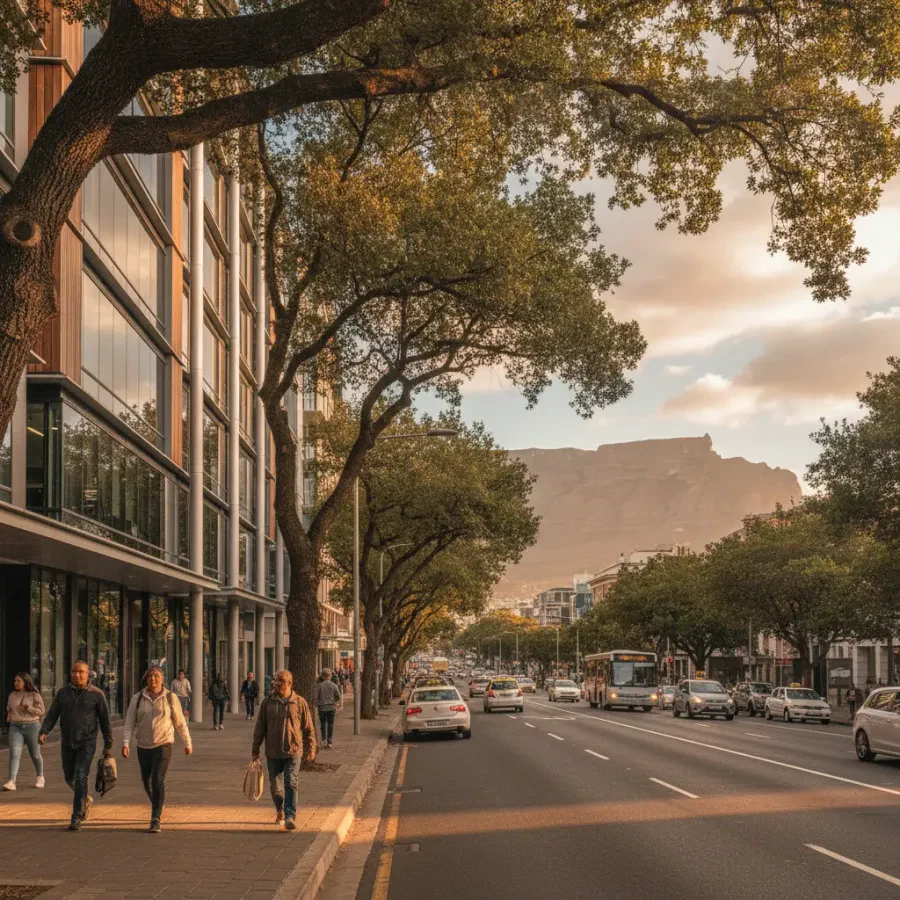
The transport modes have changed, but accessibility remains the foundation of Claremont’s commercial appeal. The node sits along the Main Road corridor linking Mowbray through to Muizenberg. It is also close to Claremont Boulevard, the M3 and several public transport connections.
That matters in practical terms. A business does not occupy an office in isolation. Staff need to get there. Clients need to find it. Suppliers, visitors and service providers need to move through the area without unnecessary friction.
From village centre to decentralised business district
As Cape Town expanded, the Southern Suburbs became more urbanised. Claremont’s location along Main Road meant that residential growth, public transport and commercial activity kept reinforcing each other.
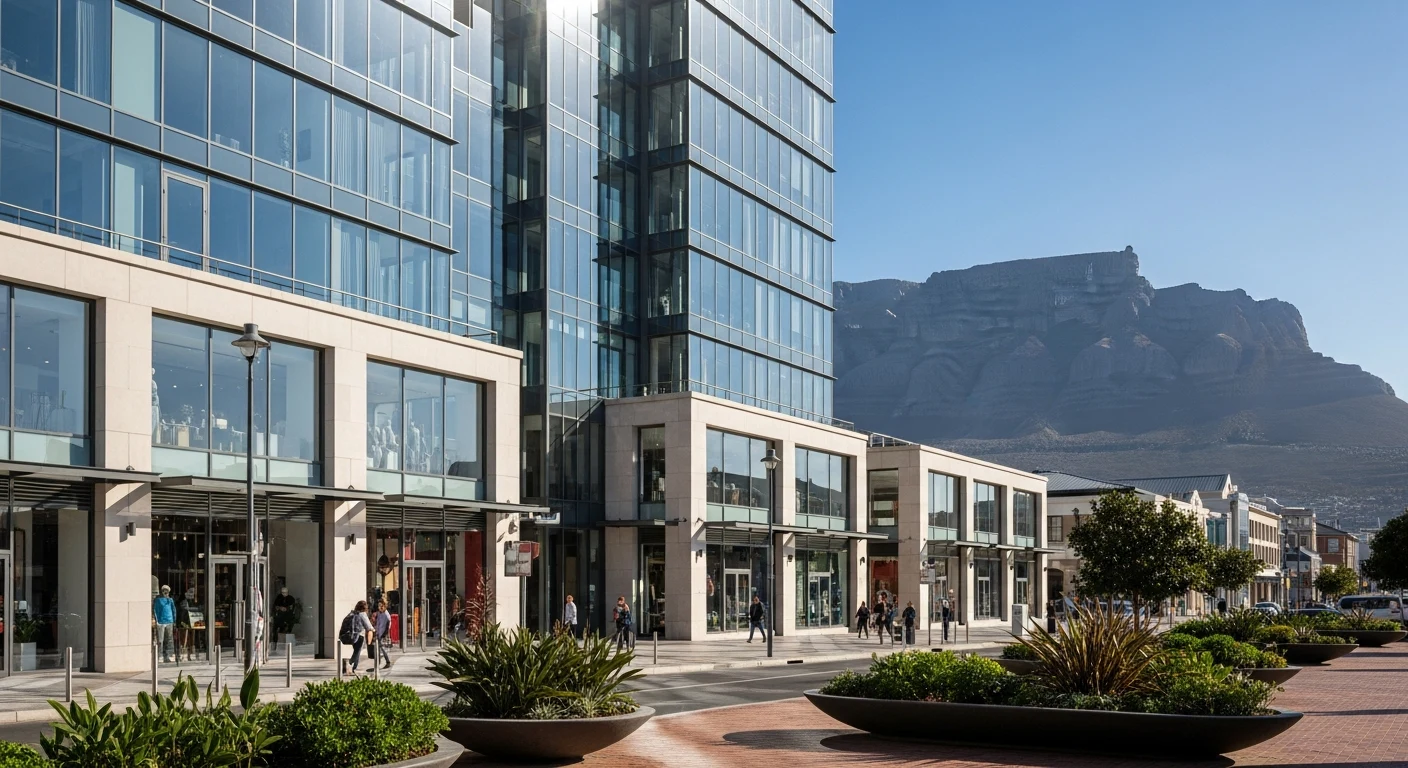
Cavendish Square, which opened in the 1970s, accelerated the node’s transition into a major retail destination. More office, residential and mixed-use development followed. A lower-density suburban centre became one of Cape Town’s most important decentralised business districts.
Cavendish Square remains the retail heart of Claremont. The centre has approximately 67,267 square metres of gross lettable area and includes national retailers such as Woolworths, H&M, Pick n Pay, Exclusive Books, Nu Metro and Clicks, according to the supplied market research. The market research source records the centre’s scale and tenant mix.
The important point for office tenants is not just the retail turnover. It is the convenience created around the workplace. Restaurants, coffee shops, banking, gyms, supermarkets and professional services are all close by. That can make a meaningful difference when a business is trying to bring people back into the office.
Why businesses continue to choose Claremont
It is an established commercial ecosystem
New business precincts can offer attractive buildings, but they often need time to develop the surrounding services that make day-to-day work easier. Claremont already has the infrastructure many companies need.
It has retail, restaurants, schools, healthcare, financial services, public transport and established residential suburbs around it. For a tenant signing a long lease, that maturity reduces some of the risk that comes with an untested location.
Public transport supports larger workforces
Claremont Station and the surrounding taxi, bus and road network give employees access from several parts of Cape Town. This is particularly relevant for people-intensive businesses such as BPO operations, technology companies and financial services firms.
Transport is not a side issue in an office decision. A building that is difficult to reach can affect recruitment, punctuality, attendance and staff retention. Two offices with similar rentals can produce very different outcomes if one is materially easier for employees to access.
The residential catchment is unusually strong
Claremont is surrounded by established residential areas including Newlands, Rondebosch, Kenilworth, Bishopscourt and Constantia. That catchment supports both staff accessibility and client-facing business.
For attorneys, accountants, wealth managers, asset managers, consultants and medical practices, the address itself can influence how clients experience the business. Claremont offers a central Southern Suburbs location without the congestion and character of the Cape Town CBD.
Businesses comparing nodes may also want to consider nearby office space in Newlands or offices in Rondebosch. The right choice depends on parking, visibility, building quality and client access, not simply on the suburb name.
Claremont office rentals and current market conditions
The supplied market research places gross asking rentals for Claremont office space at approximately R171 per square metre to R280 per square metre, with an average market rate of about R197 per square metre as of mid-2026. These are asking rentals, not necessarily the final deal terms.
The supplied market research indicates a compressed office supply position, with limited new stock and continued refurbishment of existing buildings.
That does not mean every building is achieving the top of the rental range. Claremont contains a mixture of older properties, refurbished buildings and modern mixed-use developments. Rental differences often reflect real operational differences.
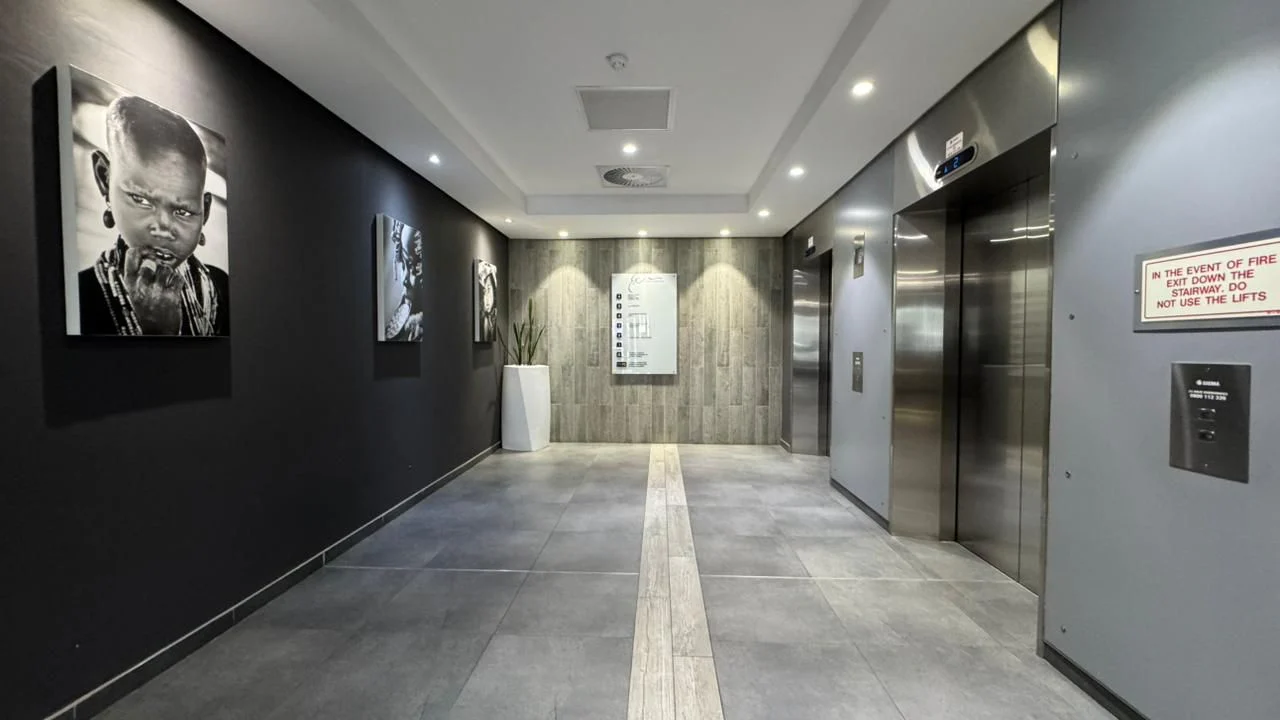
A higher rental may be justified by backup power, efficient floorplates, better natural light, stronger security, quality common areas, reliable lifts, good parking and proximity to public transport. A cheaper office can become expensive if the tenant has to spend heavily on upgrades, deal with poor parking or compromise on client experience.
The buildings and micro-locations matter
Buildings such as Stadium on Main, The Citadel, Sunclare, Grove Exchange and MontClare Place form part of Claremont’s modern commercial offering. They do not all suit the same tenant.
A professional services firm receiving private clients may prioritise a polished entrance, visitor parking, signage and a convenient location near retail. A 300-seat operation may care more about floorplate efficiency, public transport, power resilience and the ability to manage staff movement.
This is why an online search for commercial property to rent in Claremont is only the beginning. The street-level details matter:
How close is the building to Main Road and public transport?
Is visitor parking practical, or merely available on paper?
What is the parking ratio for the required office area?
Does the building have backup power, and what does it cover?
Can the floorplate accommodate the tenant’s layout without wasting space?
Is the building suitable for confidential or client-facing work?
Are signage and visibility actually possible?
What are the additional costs beyond the advertised rental?
Parking is often the deal-breaker. A tenant may have a clear rental budget but discover that its required parking density rules out the building. This comes up frequently with businesses that need substantial staff parking or regular client visits.
Mixed-use development is changing the node again
Claremont is old and new at the same time. Historic streets and mature trees sit alongside dense residential projects, modern offices and retail centres.
The redevelopment of the former Werdmuller Centre, known as Neo, is a major example. The project is valued at approximately R800 million and is planned as a mixed-use precinct of about 30,000 square metres of gross lettable area, including retail, office space and approximately 350 residential units.
Mixed-use development fits Claremont’s underlying strengths. The node already brings together homes, workplaces, retail and public transport within a relatively compact area. New projects add density to a place where developable land is constrained, while increasing the number of people who can live, work and spend time locally.
The Claremont Improvement District Company also plays a role in maintaining safety, cleaning and urban management standards. For landlords and tenants, these services affect how the precinct feels and functions every day.
Heritage is part of the property conversation
Claremont’s history should not be reduced to a nostalgic story about pretty old buildings. Development changed the suburb, and some of that change involved the loss of buildings, open spaces and communities.
Vineyard Field, Bishopscourt woods, Paradise Estate and the older Feldhausen setting were gradually replaced by roads, homes, schools and commercial development. The old Main Road facades have also disappeared.
Arderne Gardens is an important survivor. It preserves some of the spacious, landscaped character that once defined the area. As Claremont becomes denser, public gardens and mature trees become more valuable. They provide relief from the built environment and help give the node an identity that cannot simply be recreated in a new development.
For investors and landlords, this has a commercial implication. Buildings do not compete only on rentable area. They compete on the quality of the experience around them. A strong public environment, walkability and a recognisable sense of place can support tenant retention over time.
What should a tenant do before signing a Claremont lease?
Start with the business rather than the building.
Map where employees live. Decide how many people will be in the office on a normal day. Establish the real parking requirement. List the number and type of client visits. Confirm power, access control, fibre, air-conditioning and after-hours requirements.
Then compare buildings on a like-for-like basis. Gross rental alone is not enough. Ask about operating costs, parking charges, tenant installation allowances, escalation, backup power, generator recovery and any planned refurbishment.
Visit at different times of day. The morning commute, lunchtime activity and late afternoon departure can tell you more than a polished brochure. Walk from the station. Test visitor parking. Look at the entrance, public areas and surrounding streets.
Landlords should take the same practical view. Good space is not automatically competitive space. Refurbishment should focus on the features tenants now care about, including reliable power, efficient layouts, quality common areas, security, natural light and a credible amenity offering.
The practical takeaway
Claremont’s commercial strength comes from accumulated advantages. Its position, transport routes, residential catchment, retail offer and established business community have been building on one another for generations.
That makes it a dependable office node, but it does not make every property a good fit. The best deal depends on the relationship between the building, the workforce and the way the business operates.
If you are considering a move, use our property search to review available options, then compare the buildings on parking, access, power, layout and total occupancy cost. For a more tailored view of Claremont office space, get in touch with Brightwave Commercial Property. We can help you assess the individual properties, not just the suburb on the map.