The true cost of a bad commute
I was grabbing a coffee with a client last week, and the conversation didn't start with interest rates or lease renewals. It started with a rant about the N1. We are all feeling it. When you spend 96 hours a year staring at brake lights, you are not just burning fuel. You are burning through your best people. Recent reports show Cape Town has slid to become one of the most congested cities in the world, and for businesses, this is not just a nuisance. It is a direct tax on your productivity.
If you are forcing your team to fight gridlock every morning just to reach your office space in the Cape Town CBD, you are paying for it in hidden ways. Staff fatigue, lower output, and the constant threat of losing talent to competitors with more flexible, accessible offices are the real bills you are picking up.
Why location strategy is the new HR priority
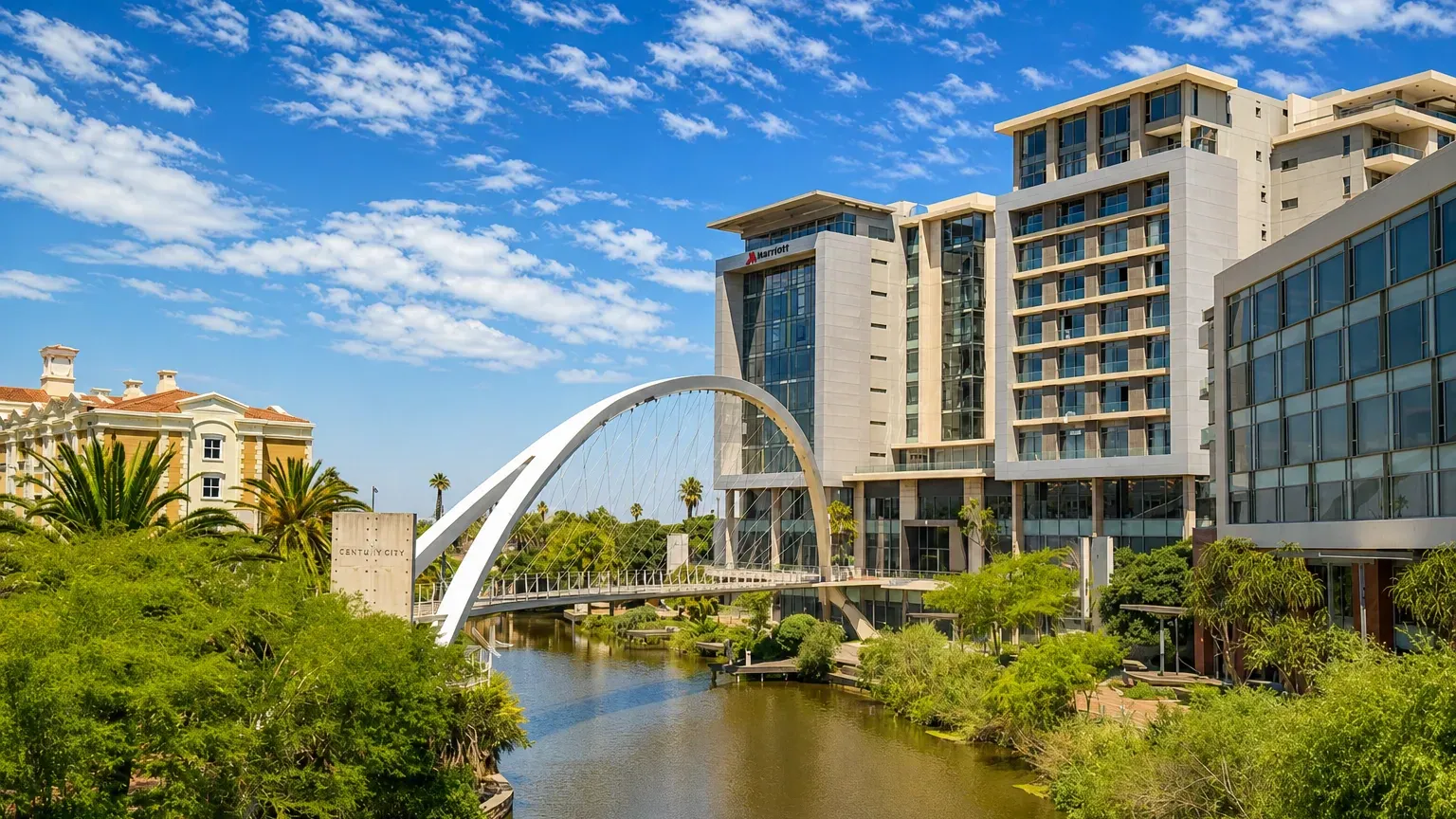
Historically, businesses clustered in the centre because that is where the infrastructure was. Today, that is a relic of the past. If your staff lives in the Northern Suburbs, forcing them to crawl into town is a recipe for resignation. We are seeing a massive shift towards decentralisation. It is why nodes like Century City remain so resilient and why newer, smaller hubs like Tygervalley or even the Westlake corridor are gaining traction. These areas allow employees to bypass the major bottlenecks on the N1 and M3.
According to data from the City of Cape Town, current infrastructure investment is struggling to keep pace with rapid urban expansion. Relying on the city to fix the roads is a long game. The smarter move? Get your business closer to where the talent sleeps.
Operational friction and the logistics tax
It is not just office workers suffering. If you rely on getting goods from the port to your clients, you are losing money on every kilometer. The logistics sector is currently feeling the pressure of massive delays, forcing companies to move from efficient, lean stock levels to a safer but more expensive, just-in-case model. If your business depends on frequent deliveries, you should be looking closely at well-connected industrial zones. We have seen a surge in interest for warehouses in Montague Gardens because of its strategic proximity to arterial routes, which helps dodge the worst of the inner-city gridlock.
Practical steps for your business
So, what should you do if your lease is up in eighteen months? First, look at your team. Plot their home addresses on a map. You might be surprised to see how much time they waste in the car. Second, talk to us about our market insights regarding satellite offices. Even a smaller satellite hub in a place like Claremont can take the pressure off your main team and serve as a massive retention tool.
Third, stop looking at the rental price alone. A slightly cheaper office in a traffic-heavy zone is a false economy. Factor in the cost of turnover and the cost of lost productive hours. Companies that get this right are already ahead of the pack. They are using their location as a competitive advantage to attract the best talent in the city. If you want to review your options or run the numbers on a new location, get in touch. Let us look at the map together before you sign your next lease.
If you are ready to see what is out there, start your search available properties here. Don't let your commute define your company's future.